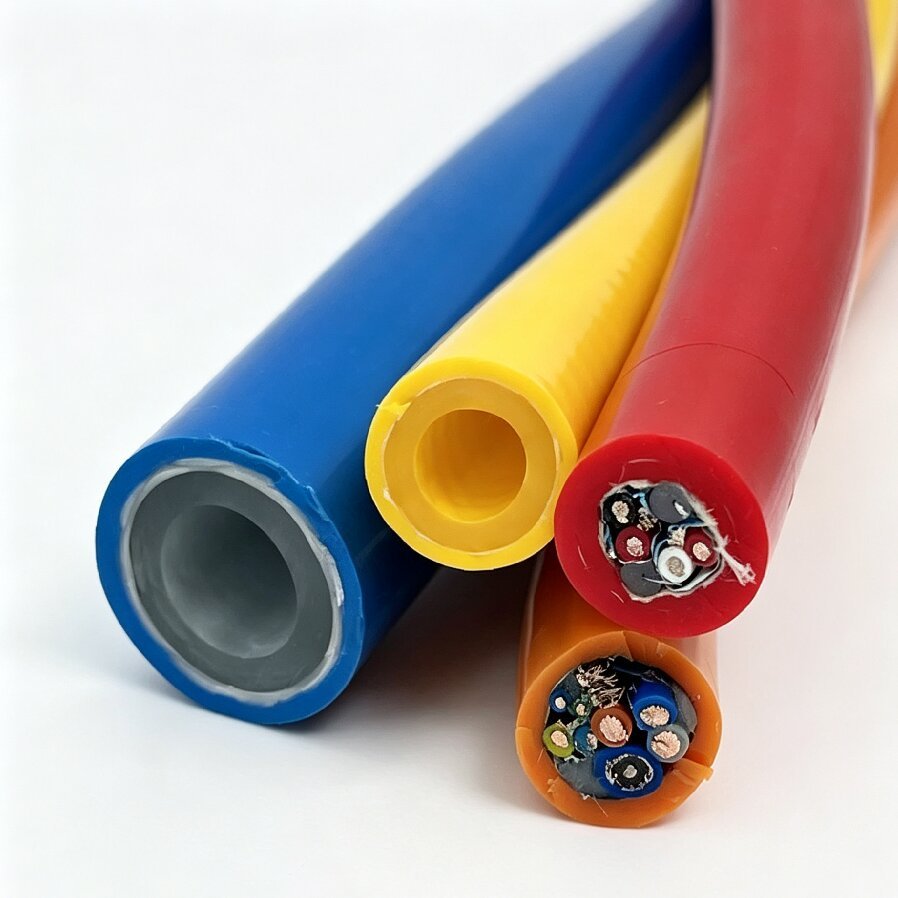
A Diver Umbilical is a composite assembly that serves as the physical and physiological connection between a commercial diver and the surface support team. Its integrity is paramount for life support, operational efficiency, and diver safety. Unlike a simple cable, it is a system integrating multiple components within a unified sheath or bundled together.
1. (Core Components & Functions)
The umbilical typically consists of the following elements, helically wound around a central strength member:
-
Gas Hose: A high-pressure hose that delivers breathing gas (air, nitrox, heliox, etc.) from the surface compressor or gas banks to the diver’s helmet or full-face mask. It is typically made of synthetic rubber with a reinforcing braid for pressure retention.
-
Communication Cable: This contains twisted pair copper wires for a full-duplex voice communication system. It is heavily shielded to ensure clear, uninterrupted audio, free from electrical noise. This is the diver’s primary lifeline for reporting status and receiving instructions.
-
Strength Member: The core component that bears the mechanical load. This can be a galvanized steel wire rope (for heavy-duty applications) or a high-strength synthetic fiber like Dyneema® or Kevlar® (which is lighter and neutrally buoyant). This member is used for hoisting or recovering the diver if necessary.
-
Electrical Conductors (Optional): Insulated copper wires to provide low-voltage DC or AC power for:
-
Hot Water Hose (Optional): In very cold water operations, a separate hose may be included to pump heated water from the surface to a diver’s hot water suit, which circulates the water to keep the diver warm.
2. (Key Engineering & Safety Features)
-
Robustness and Abrasion Resistance: The outer jacket, often made of polyurethane or synthetic rubber, is designed to withstand abrasion against ship hulls, rocks, and other underwater structures.
-
Kink Resistance: A critical safety feature. The design and materials are chosen to prevent kinking, which could restrict gas flow or damage internal components.
-
Buoyancy Characteristics: Depending on the application, umbilicals can be designed to be slightly negative, neutral, or positive in buoyancy to minimize drag and diver effort.
-
Marker Spacing: The umbilical is often marked at regular intervals (e.g., every 5 or 10 feet) to allow the surface team to accurately know how much umbilical has been deployed and thus estimate the diver’s distance from the dive point.
-
Pressure Rating: The gas hose must be rated for pressures significantly higher than the maximum operating depth requires.
3. (Applications)
-
Offshore Oil & Gas Industry (platform inspection, maintenance)
-
Ship Husbandry (hull cleaning, inspection, and repair)
-
Civil Engineering (dam, lock, and bridge inspection/repair)
-
Search and Recovery Operations
-
Scientific Diving Support
-
Military and Police Diving Operations