Product Overview
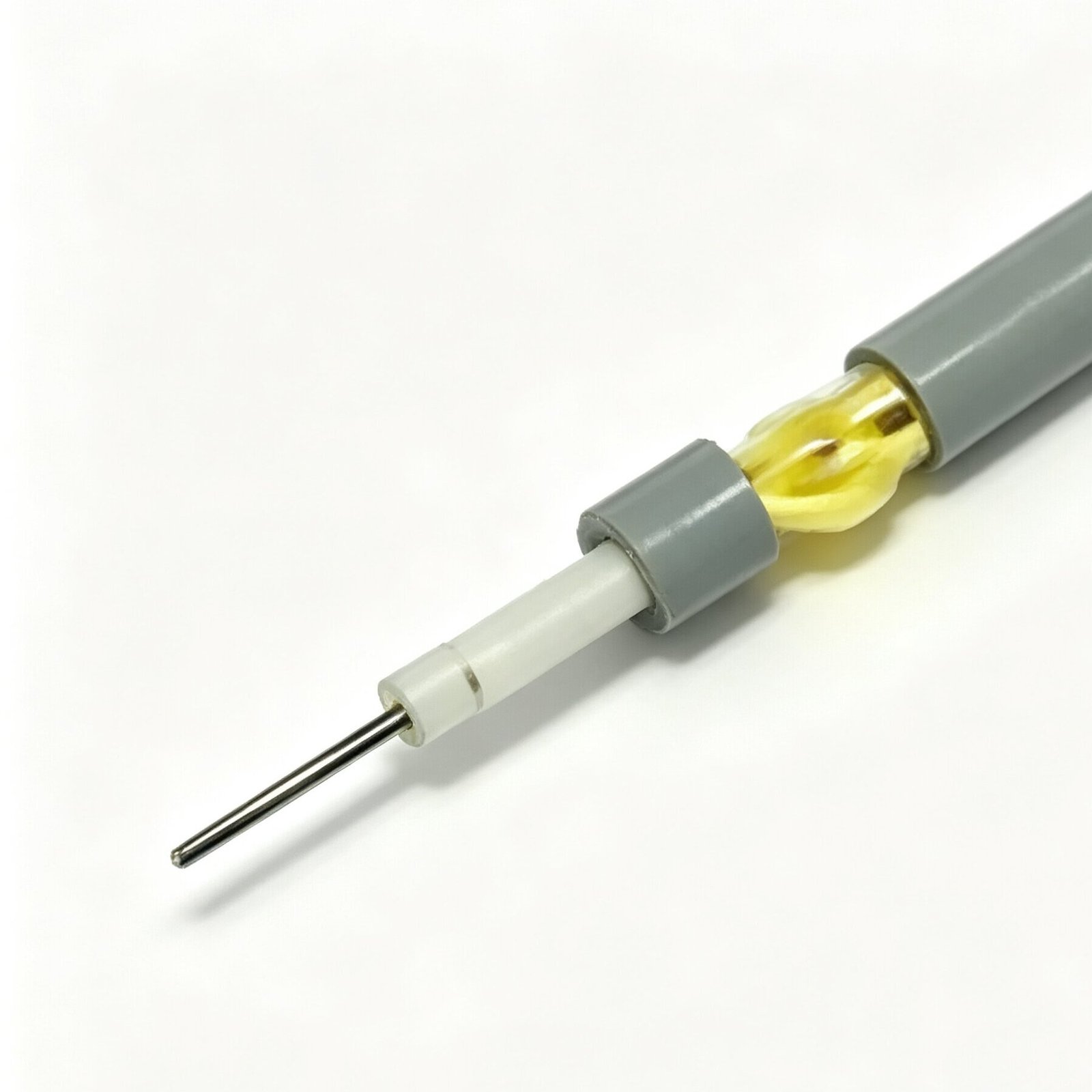
The submarine coaxial cable is a professional-grade undersea communication cable independently developed for long-distance, high-stability signal transmission beneath the ocean. Unlike standard shallow-water signal cables, this coaxial assembly integrates a precision impedance-matched architecture and multi-layer protective design, specifically engineered to perform reliably in harsh deep-sea environments characterized by high hydrostatic pressure, high humidity, and severe corrosion. Serving as a critical transmission medium for underwater data, video, and high-frequency signals, it is widely implemented in fixed seabed installation and long-term submergence marine engineering applications.
Featuring a high-purity conductive core, low-loss dielectric insulation, high-density shielding, and a marine-grade protective jacket, the cable’s layered construction effectively minimizes high-frequency signal attenuation while rejecting external electromagnetic interference and seawater ion interference. It sustains consistent and stable communication performance during prolonged deep-sea deployment, resolving common issues such as signal delay, distortion, and transmission instability associated with standard underwater cables in subsea environments.
Key Product Features
- Ultra-Low Signal Attenuation: Utilizes imported low-loss insulation materials and a precision symmetrical coaxial structure to drastically reduce high-frequency signal loss over long undersea distances, ensuring rapid and accurate signal output.
- Multi-Layer Anti-Interference Shielding: Equipped with a composite shielding system consisting of aluminum foil and braided mesh, it isolates external electromagnetic interference, seawater current crosstalk, and underwater environmental noise to deliver pure and stable signal transmission.
- Deep-Sea Pressure Resistance: A reinforced, fully sealed pressure-resistant structure withstands extreme deep-ocean hydrostatic pressure, preventing structural deformation, water ingress, and core damage under the most demanding subsea conditions.
- Superior Marine Corrosion Resistance: Constructed with a specialized anti-aging marine polymer jacket, the cable resists seawater salt corrosion, ultraviolet radiation, marine biofouling, and oil contamination, greatly extending service life.
- Balanced Structural Toughness: Optimized internal design achieves an ideal balance between rigidity and flexibility, adapting to seabed installation, floating suspension, and tidal forces without cracking or breaking in complex marine environments.
Structural Advantages
Conventional underwater communication cables often suffer from signal attenuation and insufficient anti-interference performance in deep-sea environments due to basic structural limitations. Our submarine coaxial cable implements a standardized coaxial impedance design to achieve precise signal impedance matching, significantly enhancing high-frequency transmission efficiency. The fully sealed, watertight construction completely blocks water penetration, eliminating short circuits and signal failure caused by moisture ingress. Compared with traditional cables, it offers extended transmission range, improved stability, and greater adaptability to extreme environments, fully satisfying the stringent requirements of submarine engineering projects.
Application Scenarios
This high-performance submarine coaxial cable is widely applied across professional deep-sea and offshore communication engineering fields, supporting both fixed installation and long-term submerged operation:
- Deep-ocean exploration and marine scientific research communication systems
- Signal transmission for offshore wind farms and subsea oil & gas platforms
- Wiring for subsea pipeline monitoring and underwater safety inspection systems
- Fixed seabed communication installation and underwater monitoring equipment connections
- Marine environmental monitoring, hydrological data collection, and signal transmission
- Underwater auxiliary communication facilities for large-scale offshore engineering
Capacidad de personalización
We provide complete personalized customization services for submarine coaxial cables. Based on actual operating depth, transmission distance, and signal frequency requirements, we can customize impedance parameters, jacket thickness, pressure resistance rating, and cable length. Multiple structural configurations are available, including single coaxial core and integrated composite multi-coaxial core designs. All customized products comply with international marine industry standards, and both OEM and ODM project orders are supported.
Quality Assurance & Packaging
Each batch of submarine coaxial cables undergoes rigorous professional testing prior to delivery, including signal attenuation testing, deep-water hydrostatic pressure testing, seawater corrosion aging testing, and shielding performance verification. Qualified cables are packaged on high-strength wooden reels with multi-layer waterproof and impact-resistant wrapping, capable of withstanding long-distance marine transportation and harsh on-site installation conditions to ensure stable and reliable performance following subsea deployment.